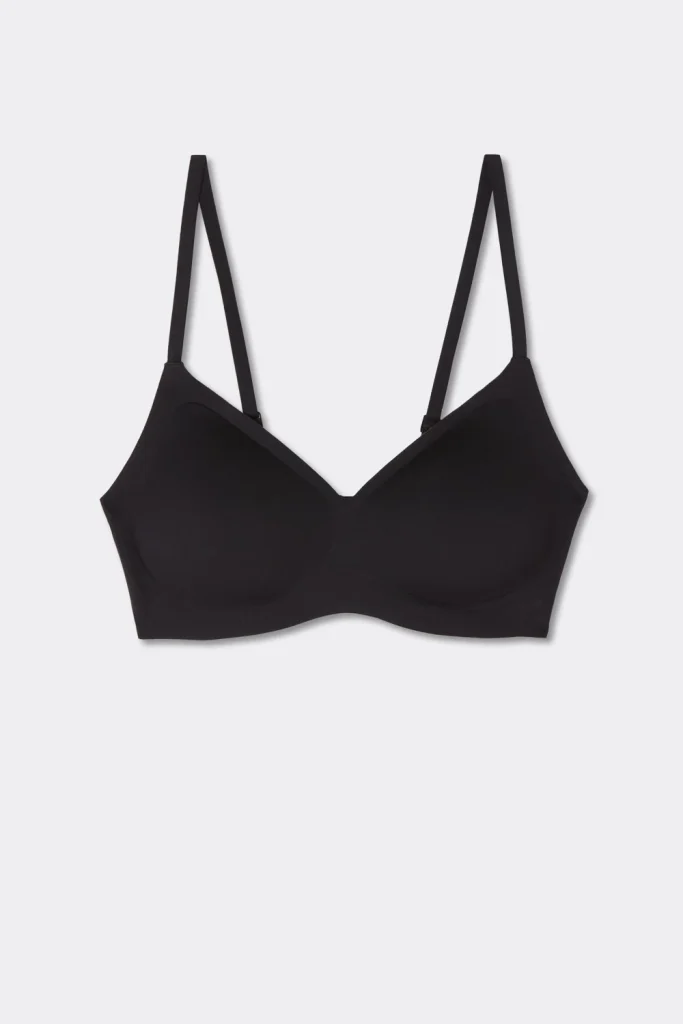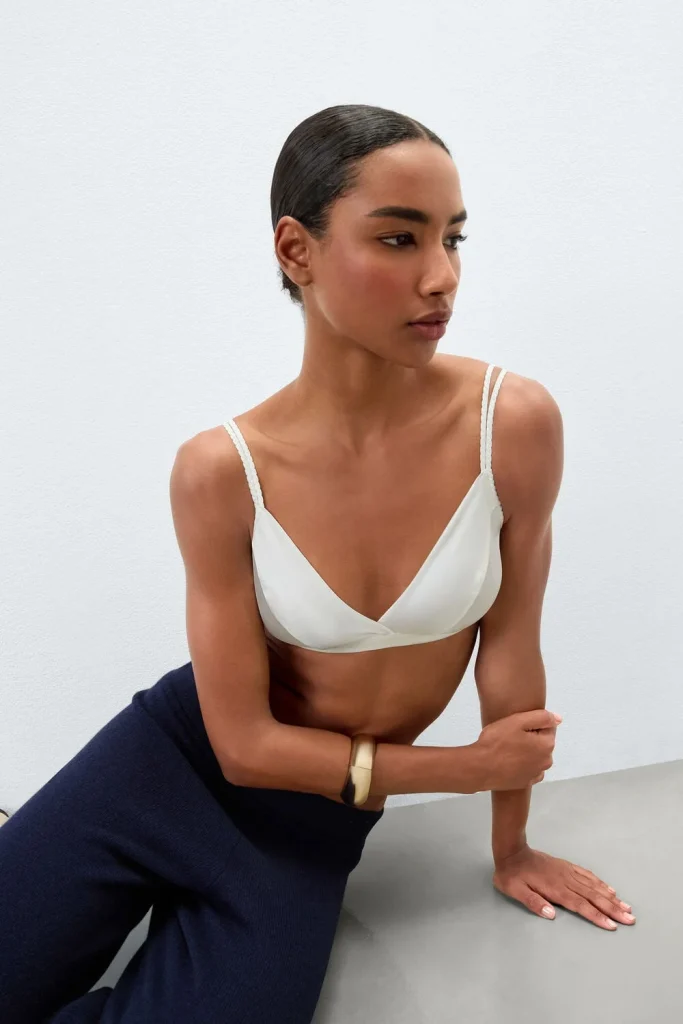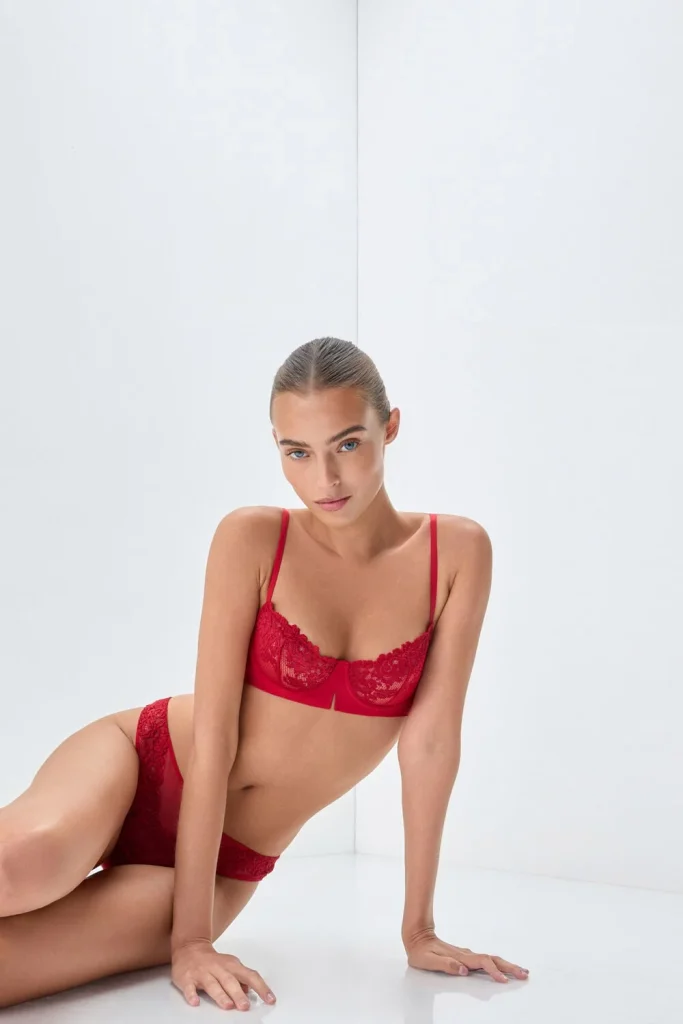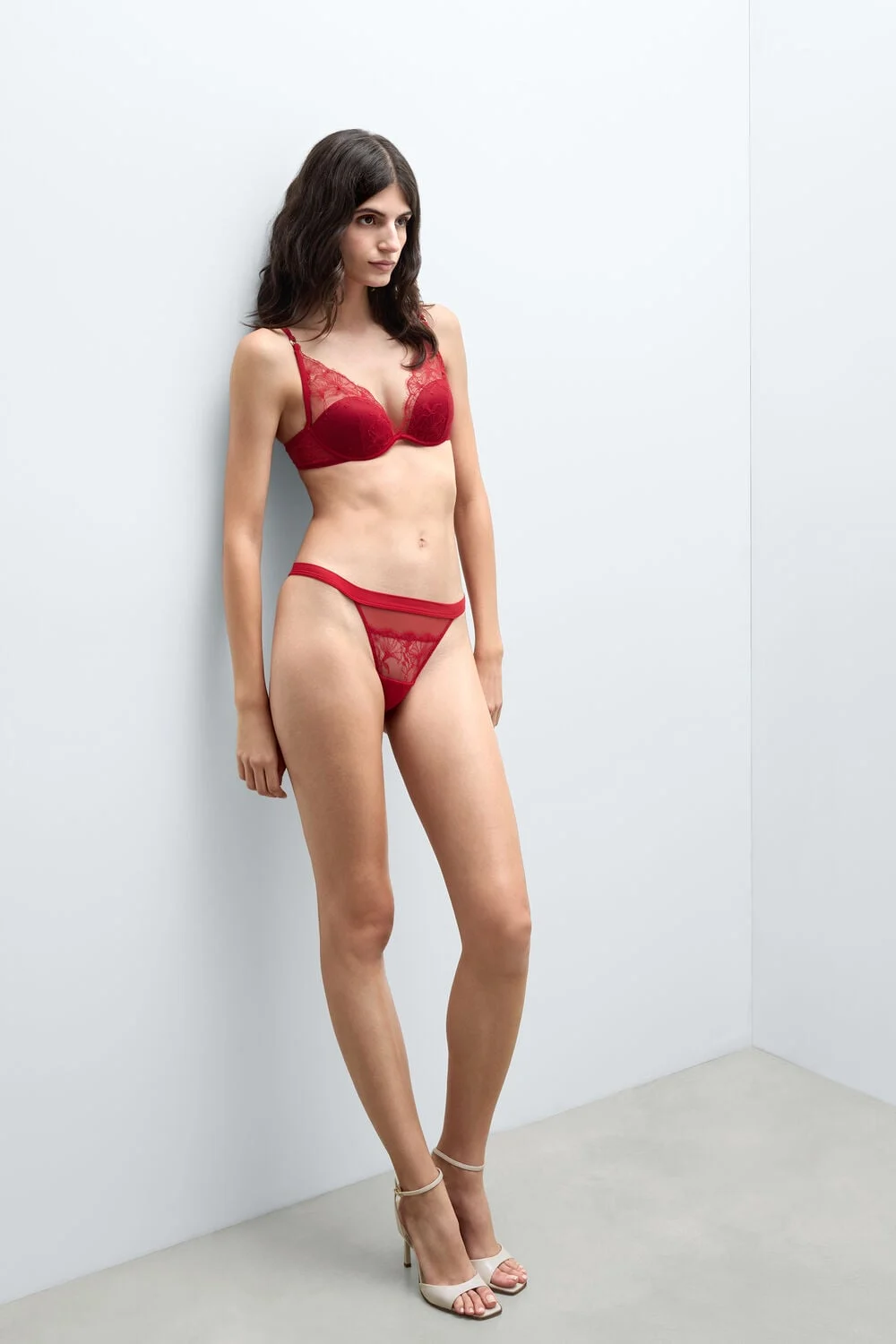
Bikini, Brazilian, high-waisted and boyshort shapes explained through waist height, leg openings and everyday movement.
Start with two separate questions
Waist height and back coverage are independent choices. A high-waisted brief need not cover the entire seat, and a low-rise cut need not be a thong. The official category separates Brazilian, bikini, high-waisted, thong and boyshort styles. Compare the front, back and side photographs rather than relying on a single name.
Map the waist to your clothes
Consider where your trouser or skirt waistband sits. An underwear edge directly underneath a stiff waistband may feel different from one above or below it. Sit down during a fitting and check for rolling. A higher cut is useful only if its position suits your torso and the clothes you wear.
Check leg openings without tugging
The opening should stay comfortable when walking and sitting. Constant adjustment can suggest the size, leg curve or back coverage is unsuitable. Sizing up changes more than the waist, so compare a different pattern if the waistband fits but the leg openings do not. Avoid choosing solely from a flat product photograph.
Read the fabric in layers
Look for separate composition information for the main fabric, gusset, lace or lining. A cotton gusset does not mean the entire brief is cotton. Stretch and seam placement affect the finish beneath trousers. No brief can be promised invisible under every combination of fabric weight, colour, fit and lighting.
Fit the hip, then assess the rise
Take a relaxed hip measurement around the fullest area and consult the current product chart. Letter sizes differ between brands and markets. A chart provides a starting point; comfort through movement decides whether the cut works. Respect hygiene seals and the retailer’s fitting and return conditions when trying a new shape.
Make the drawer earn its space
Select several pairs that suit your most frequently worn outfits, then add specialist cuts only when needed. Keep clean pieces dry and let washed elastic return to shape before storage. Replace garments when openings lose recovery or seams deteriorate. A different size or fabric may be more useful than another identical multipack.
Sources & further information
Independent editorial. Check product details and care instructions with the original source.