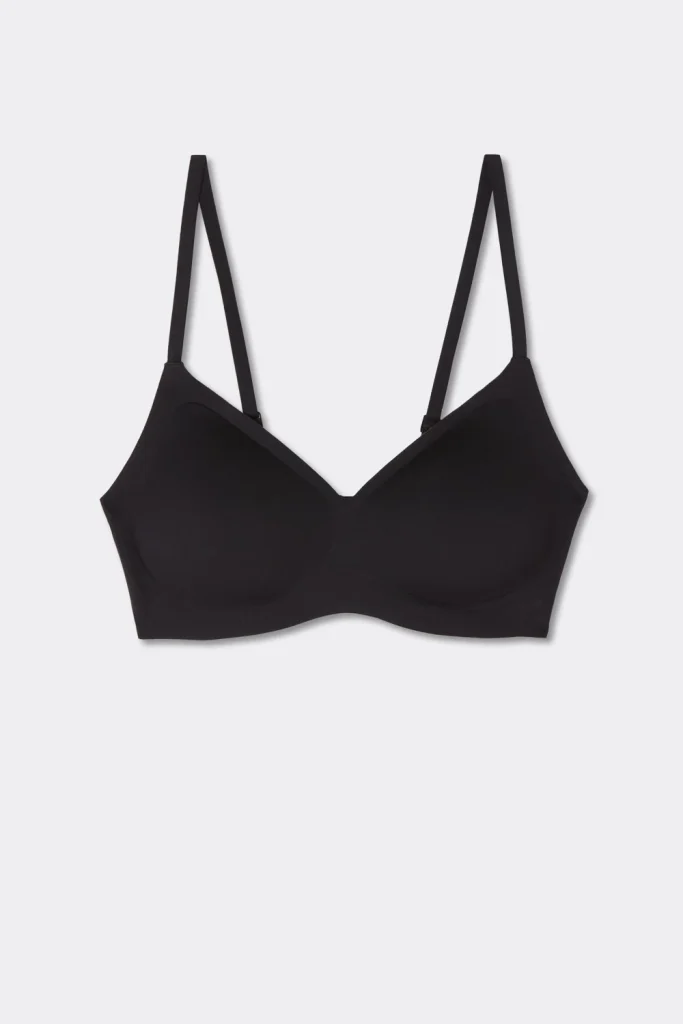
Read lace as a construction choice, then check the edges and layers that determine how it feels and looks.
Lace is a structure, not a fibre
A lace pattern can be made from different fibre blends. The official textile guide gives a specific composition for its Ultrasoft Lace collection, but that is not the recipe for every lace garment. Look at the individual product label and distinguish the lace section from lining, elastic and other fabric panels.
Decide how much transparency you want
Product photographs may show a garment against skin or a background that changes the apparent opacity. Check whether the cups or front panels are lined and whether the lining extends to the edges. Choose the level of coverage you actually want rather than assuming every floral pattern has the same transparency.
Feel the edges first
Scallops and seams can sit at the neckline, underarm, waist or leg. These contact points often matter more than the appearance of the central motif. During a fitting, move your arms or sit down and notice where the edging rests. An attractive pattern is not a reason to accept persistent scratching or pressure.
Compare a flat and textured finish
Some lace lies relatively flat; embroidery and raised motifs can create a more visible surface. Test beneath a fine knit or light blouse if discretion matters. Alternatively, let a deliberate lace neckline become part of an outfit. Neither choice requires promising invisibility or treating all lace as unsuitable for ordinary daytime use.
Do not let softness replace fit
A soft stretch lace still needs the right cup volume, band or brief cut. If an edge cuts into the bust or a waistband rolls, reassess the pattern and size. Stretch can accommodate movement, but it cannot turn an unsuitable shape into a reliable fit simply by being pulled more tightly.
Protect the openwork between wears
Follow the item’s care label and prevent hooks or rough fasteners from catching the lace. If machine washing is permitted, fastening bras and using a bag reduces contact with other garments. Avoid wringing delicate panels. Store dry pieces away from jewellery and inspect small snags before they grow into damage along a stressed edge.
Sources & further information
Independent editorial. Check product details and care instructions with the original source.